Common Signs You Need Gearbox Repair

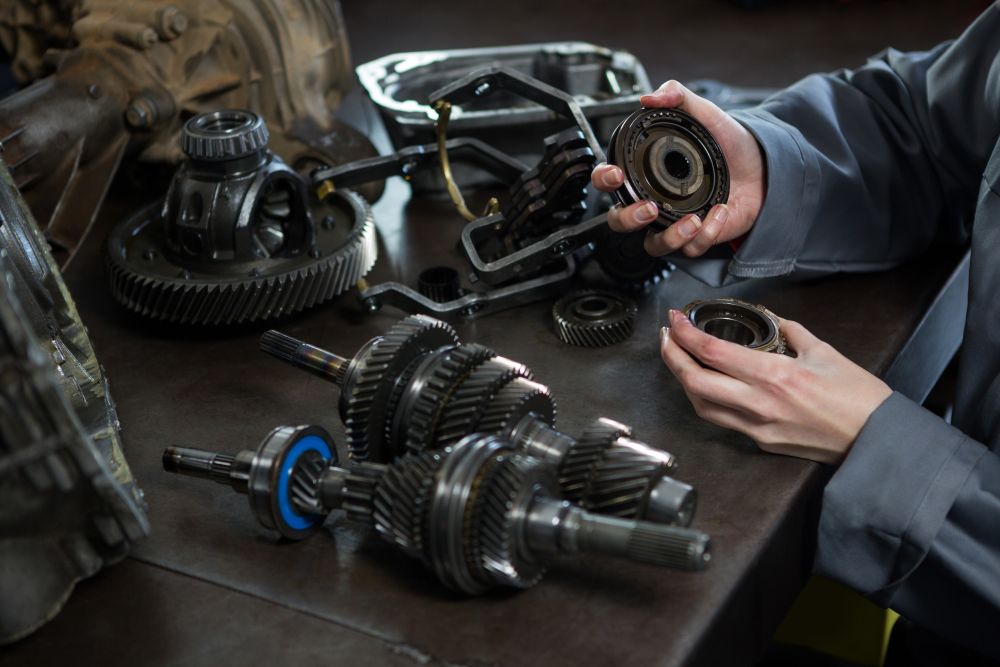
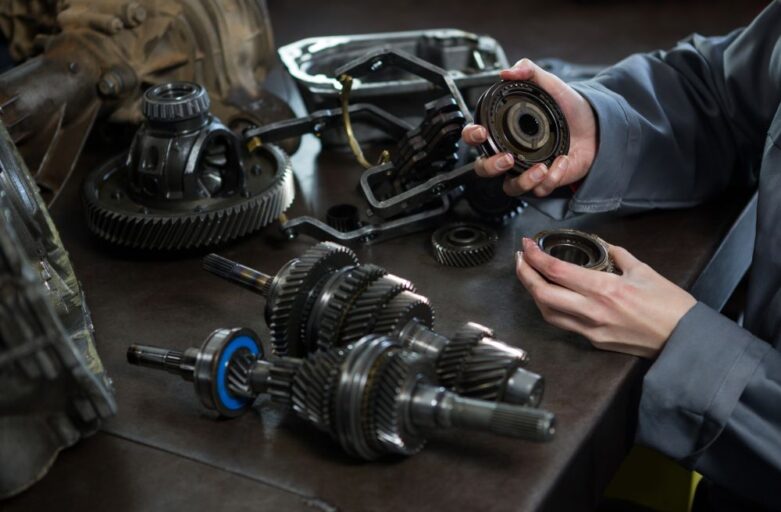
Person holding gears at a workbench with various gearbox components and mechanical parts laid out in front of them, inspecting for common signs you need gearbox repair.

Gearbox problems tend to announce themselves gradually through the everyday act of shifting rather than through a sudden, obvious failure. A driver who shifts gears dozens of times on a typical commute is in a good position to notice small changes long before a workshop scan tool would flag anything, provided they know what to watch for. The signs below are the ones that come up most often for cars in daily use, and none of them are worth waiting out. None of them require special tools to notice either, just a bit of familiarity with how the car normally behaves and a willingness to act on a change rather than explain it away.

Difficulty Getting Into Gear

A gear lever that used to move cleanly into position but now needs extra force, or occasionally refuses to engage on the first attempt, is one of the earliest and most common signs of gearbox wear. In a manual car this often traces back to a worn clutch that is not fully disengaging, a stretched or maladjusted clutch cable, or synchromesh rings inside the gearbox that have worn down and can no longer match gear speeds smoothly. In an automatic, similar hesitation usually points to a different set of internal components, but the underlying message is the same either way, the gearbox is not shifting the way it did when it was in good condition, and that gap tends to widen rather than close on its own.

Grinding or Crunching When You Shift

A grinding or crunching sound during a gear change, particularly noticeable when shifting quickly or without a full clutch depression, means the gears are not meshing the way they are meant to. In most cases this comes down to worn synchromesh components that are supposed to match the rotational speed of the gears before they engage. A single grind under an unusually rushed gear change might be a one-off, but a sound that repeats on the same gear consistently, second gear is a common culprit in many cars, indicates wear that will keep getting more pronounced with continued driving rather than resolving itself.

Trouble Finding Reverse

Reverse gear often gets less use than the forward gears, which means wear there can go unnoticed for longer until it becomes an obvious problem, typically showing up as difficulty engaging reverse or a grinding noise specifically when shifting into it. Because reverse is engaged through a slightly different mechanism in many gearboxes, often via an idler gear rather than a direct synchromesh engagement, trouble specifically with reverse while other gears still shift normally can actually help narrow down where inside the gearbox the wear has occurred, which is useful information for whoever ends up diagnosing it.

A Clutch Pedal That Feels Different

The clutch pedal itself offers useful diagnostic information that is easy to overlook simply because it becomes part of the background feel of driving. A pedal that engages very high or very low compared with how it used to, a spongy or inconsistent resistance, or a pedal that feels like it is not connecting with anything for part of its travel all point toward a problem, whether that is in the clutch itself, the hydraulic system operating it, or the gearbox behind it. Bringing the car in for gearbox repair as soon as the pedal feel changes noticeably, rather than adapting to the new feel over a few weeks, gives a technician the best chance of resolving the issue before it affects the gearbox’s internal components more seriously.

Fluid Spots Where You Usually Park

Gearbox oil is thicker and often has a slightly different smell than engine oil, and a small dark patch appearing consistently under the same part of the car, usually somewhere near the middle rather than the front where engine oil tends to drip, is worth investigating rather than dismissing as condensation. A gearbox that runs low on oil because of a slow leak wears its internal components faster than one properly filled, since the oil is what keeps gears and bearings from grinding against each other under load. Catching a leak early, while the fluid level is only slightly low, is a considerably smaller job than dealing with the wear caused by a gearbox that has been running low for months without the driver noticing.

Vibration or Noise That Changes With Road Speed

A vibration or noise that gets stronger as the car picks up speed, then fades again when it slows down, points toward a problem tied to something rotating inside the drivetrain rather than the engine itself, and a worn output bearing or a damaged mount inside the gearbox housing is a common cause. This kind of symptom is easy to mistake for a wheel balance issue or worn tyres, since both can produce a similar speed-related vibration, which is why an accurate diagnosis matters before assuming the gearbox is at fault. Ruling out simpler causes first, then confirming the vibration genuinely originates from the drivetrain rather than the wheels, saves the cost of chasing the wrong problem while the real one continues to develop underneath the car.

Gearbox wear rarely reverses itself, and every one of these signs tends to get more pronounced the longer a car keeps being driven in that condition. Treating an unusual shift feel or a new noise as worth checking out promptly, rather than something to monitor indefinitely, is what keeps a manageable repair from turning into a much larger one.


A Simple Guide to Common Car Repair Services

Two men examine a car engine in a garage; one holds a clipboard and points at the engine while discussing with the other, illustrating A Simple Guide to Common Car Repair Services.

Car repair covers a wide range of work, and the terminology thrown around by a workshop can be confusing if you have never needed a particular repair before. Knowing roughly what each category involves, what causes it, and what symptoms usually point to it makes conversations with a technician far more productive, and it helps you recognise a developing problem before it turns into a breakdown. The following covers some of the repair categories that come up most often for everyday drivers. Each one has its own set of warning signs, its own typical causes, and its own point at which delaying the work starts costing more than addressing it early.

Brake System Repairs

Brake work usually starts with pads, which wear down through normal use and need replacing well before they wear through completely. A squealing noise when braking is often a built-in wear indicator doing its job, while a grinding sound means the pads are already gone and the rotors are being damaged with every stop. Rotors themselves can warp from heat cycling, which shows up as a pulsing sensation through the brake pedal or steering wheel under braking. Brake fluid also degrades over time as it absorbs moisture from the air, which lowers its boiling point and can lead to a spongy pedal feel, so fluid replacement is part of proper brake maintenance even when the pads and rotors are still in good condition. A dashboard brake warning light, distinct from the wear indicator squeal, usually points to low brake fluid or a fault within the hydraulic system itself, and it deserves the same prompt attention as any other safety-related warning.

Suspension and Steering Work

Singapore’s roads are generally well maintained, but potholes, expansion joints, and the occasional construction-related surface still take a toll on shocks, struts, and the bushings that connect suspension components to the chassis. Worn shocks or struts show up as excessive bouncing after a bump, a nose dive under braking, or a vague, floaty feeling at higher speeds. Tie rod ends and ball joints wear more gradually, but their failure affects how precisely the car responds to steering input, sometimes producing a clunking noise over uneven surfaces. A wheel alignment, often needed after a hard pothole strike, corrects the angles at which the tyres meet the road and prevents uneven tyre wear that would otherwise shorten their lifespan considerably. A car that pulls slightly to one side on a flat, straight road is often the first noticeable clue that alignment has shifted, well before uneven tyre wear becomes visible to the eye.

Electrical and Battery Problems

Modern cars carry far more electronics than older models did, and electrical faults can be some of the trickiest repairs to diagnose because a single symptom often has several possible causes. A battery that struggles to start the car on humid mornings may simply be near the end of its service life, or it could point to a parasitic draw from something staying powered on overnight. An alternator that is failing typically shows dimming headlights or a battery warning light appearing gradually rather than all at once. Fuses, relays, and wiring connections corroded by humidity can also cause intermittent issues with power windows, central locking, or dashboard displays, and tracing these faults usually requires proper diagnostic equipment rather than guesswork. A battery terminal that has developed a light crust of corrosion can mimic the symptoms of a much larger electrical fault, which is why a simple visual check is often the first step a technician takes before assuming the problem lies deeper in the system.

Air-Conditioning Servicing in Singapore’s Heat

Air-conditioning gets used almost every time a car is driven in Singapore, which means the system works harder here than it would in a country with a milder climate. A gradual drop in cooling performance usually points to a slow refrigerant leak, while a musty smell when the air-conditioning first switches on often means moisture has built up around the evaporator and needs proper cleaning. A compressor that makes a loud clutch-engaging clunk or a belt-driven squeal is showing early signs of mechanical wear that tends to worsen without attention. Because this system runs almost continuously here, keeping up with car repair that addresses these issues early tends to be considerably more comfortable, and cheaper, than waiting for the air-conditioning to stop cooling altogether during a hot afternoon drive.

Exhaust and Emissions Work

An exhaust system does more than direct noise and fumes away from the cabin, it also houses the catalytic converter that reduces harmful emissions before they leave the tailpipe. Rust and corrosion, accelerated by Singapore’s humidity, eventually perforate exhaust pipes and mufflers, producing a noticeably louder exhaust note and sometimes a rattling sound from a loose heat shield. A failing catalytic converter can trigger a check engine light and reduce fuel efficiency, and it is also relevant for older vehicles that need to pass periodic emissions testing as part of their roadworthiness requirements. Addressing exhaust issues promptly avoids both the inconvenience of a failed inspection and the gradual loss of performance that comes with a restricted or leaking exhaust system. A rattle that only appears at idle and disappears once the engine speed rises often comes from a loose heat shield rather than anything more serious, though it is still worth confirming rather than assuming.

None of these repair categories exist in isolation, and a car that has gone a long time without attention often needs work in more than one area at once. Understanding what each type of repair involves, rather than treating the whole car as one unpredictable black box, makes it easier to prioritise what needs fixing now against what can reasonably wait a little longer. Bringing a car in as soon as a symptom appears, rather than waiting for several to show up together, keeps each repair contained to its own category instead of letting one neglected system put strain on another.

Signs Your Car May Need Engine Repair

A man inspects the engine of a car with the hood open and visible smoke rising from the engine components—clear signs your car may need engine repair.

An engine rarely fails without giving some kind of notice beforehand, even if that notice is easy to miss in the middle of a normal commute. Most of the damage that ends up requiring extensive repair work started out as a small symptom that got explained away, a noise blamed on a rough road, a smell attributed to something outside the car, a light dismissed as a sensor glitch. Learning to take these cues seriously, rather than waiting for the engine to stop running altogether, is what separates a straightforward repair from a much larger and more expensive one.

Unusual Noises Under the Bonnet

A healthy engine settles into a fairly consistent rhythm once it warms up, so any new sound is worth paying attention to. A rhythmic knocking that gets faster as engine speed rises often points to worn bearings or a piston slap, both of which get worse the longer the car keeps running. A high-pitched squeal on startup usually comes from a slipping serpentine belt, while a ticking noise from the top of the engine can indicate low oil pressure reaching the valvetrain or worn lifters. None of these noises are things to wait out. An engine that sounds different from how it sounded a month ago is trying to tell you something changed mechanically, and the earlier that change gets diagnosed, the less it usually costs to fix.

Smoke, Smells, and What They Tell You

The colour of smoke coming from the exhaust narrows down the problem considerably. Blue smoke means the engine is burning oil, usually from worn piston rings or valve seals letting oil into the combustion chamber. White smoke that persists after the car has fully warmed up, especially if it has a faintly sweet smell, points to coolant entering the cylinders, often through a failing head gasket. Black smoke suggests the fuel mixture is running too rich, which can stem from a faulty sensor or an injector problem. A sweet smell in the cabin or from under the bonnet without visible smoke can still mean a small coolant leak, and a sharp burning oil smell after driving usually means oil is dripping onto a hot exhaust component somewhere in the engine bay.

Warning Lights You Shouldn’t Ignore

A steady check engine light generally means the fault is present but not yet urgent, and it is worth having read out with a diagnostic scanner at the next opportunity rather than waiting for the next service. A flashing check engine light is a different matter entirely, since it usually signals an active misfire that is sending unburned fuel into the exhaust system, which can damage the catalytic converter within minutes of continued driving. The oil pressure warning light deserves the same urgency as a temperature warning, because running an engine without adequate oil pressure can score bearings and camshaft surfaces in a very short time. None of these lights are decorative, and treating them as optional extends the time a fault has to cause further damage.

Loss of Power and Rough Idling

An engine that used to pull cleanly onto an expressway on-ramp but now hesitates or feels flat under acceleration is showing a real mechanical or sensor-related decline, not just imagination. Rough idling, where the engine shakes or the idle speed fluctuates instead of holding steady, often traces back to a vacuum leak, a fouled spark plug, or a dirty throttle body. Both symptoms tend to develop gradually, which makes them easy to adapt to without noticing how much performance has actually dropped off. Bringing the car in for proper engine repair work at this stage usually means addressing one or two specific components, whereas waiting until the car struggles to maintain highway speed altogether often means a wider range of parts have been affected by the same underlying issue.

Overheating in Singapore’s Climate

Singapore’s combination of high ambient heat, humidity, and stop-start traffic around ERP gantries puts more strain on a cooling system than driving in a temperate climate ever would. A radiator or water pump that might last comfortably in cooler conditions gets pushed harder here, especially in a car that also runs its air-conditioning compressor almost constantly. A temperature gauge that creeps up during a long queue at a checkpoint or in heavy expressway congestion, then settles once traffic moves again, is often an early sign that the cooling system is losing its margin for error. Left unaddressed, this pattern tends to progress toward a full overheating event, which can warp a cylinder head or blow a head gasket in conditions that a properly maintained cooling system would have handled without issue.

Oil and Fluid Leaks Worth Investigating

A dark patch appearing under a car in the same parking spot over several days is worth more attention than most drivers give it. Engine oil leaks often start small, from a valve cover gasket or oil pan seal, but they reduce the oil available to lubricate moving parts and can eventually starve the engine of pressure at the worst possible moment. Coolant leaks show up as a lighter, sometimes brightly coloured puddle and tend to worsen gradually until the engine loses its ability to regulate temperature altogether. Tracking down a leak while it is still a slow drip is considerably simpler and cheaper than dealing with the aftermath of an engine that ran low on a critical fluid for an extended period without the driver realising.

Taken individually, any one of these signs might seem minor enough to put off dealing with for another week. Taken together, they form a pattern that experienced mechanics recognise immediately, because engines tend to fail in predictable ways once a problem is left unaddressed. Paying attention to how a car sounds, smells, and performs on an ordinary drive is the simplest diagnostic tool available, and it costs nothing beyond a bit of attention.

AMT Precision Parts for High Accuracy Medical and Industrial Applications

A person in protective clothing operates a machine with screens and buttons in a clean laboratory, ensuring AMT Precision Parts for high accuracy medical and industrial applications are manufactured to exact standards.

AMT precision parts are built at the point where engineering discipline and operational demand meet without compromise. In manufacturing, the gap between a component that works and one that works every time, under pressure, in a cleanroom or on a production line, is often measured in microns. That distance is where the real work happens.

What Sets Precision Manufacturing Apart

There is a particular kind of rigour involved in high-accuracy component production. The tools must be calibrated consistently, the materials selected with attention to how they behave under thermal and mechanical stress, and the process repeated with the kind of discipline that prevents variation rather than corrects it. AMT precision engineering draws on deep manufacturing knowledge to deliver components where every dimension carries a consequence.

Precision parts are not simply machined to a tight specification. They are engineered with the end-use environment in mind. A component destined for cleanroom medical device assembly faces entirely different demands from one destined for an automotive drivetrain or an industrial sensor array. The materials, surface finishes, and production methods are chosen accordingly, with each decision traceable back to a real performance requirement.

Medical Applications That Cannot Afford Error

Medical device manufacturing places some of the most demanding requirements on component quality anywhere in industry. A surgical tool must seat and engage exactly. An endoscopic component must navigate narrow anatomical channels, function reliably under repeated sterilisation cycles, and hold its dimensions through each one. There is no margin for drift.

AMT precision parts used in medical applications are produced in controlled environments, often cleanrooms certified to international standards. These conditions prevent particulate contamination and ensure that each component meets the dimensional and surface finish requirements that regulatory bodies demand. Every step in the production process is documented, creating the traceability that underpins ISO 13485 and FDA compliance.

“The quality of a leader is reflected in the standards they set for themselves,” Lee Kuan Yew once observed. In precision manufacturing, that standard is expressed in microns and maintained through process consistency rather than end-of-line inspection alone.

Key medical applications include:

  • Surgical and endoscopic components: complex small-geometry parts requiring sub-millimetre tolerances
  • Implantable device parts: biocompatible materials processed under strict contamination controls
  • Diagnostic instrument housings: components demanding consistent surface finishes and exact dimensional fitment

Industrial Uses Where Accuracy Is the Product

Beyond medicine, high-accuracy components appear wherever performance margins are tight. In semiconductor fabrication equipment, parts must align to within fractions of a micron. In co-packaged optics for data centre hardware, thermal management components must dissipate heat efficiently under load without warping. In aerospace and defence assemblies, dimensional accuracy is not a quality metric but a safety condition.

High-precision parts manufactured by AMT span a range of materials and processes. Metal injection moulding allows complex three-dimensional geometries to be produced at volume, with tolerances that conventional machining alone would struggle to achieve reliably. Ceramic injection moulding extends this capability into hard, wear-resistant, and electrically insulating materials suited to chemically aggressive or thermally demanding industrial environments.

For thermal management specifically, tungsten-copper heat sinks offer the conductivity and dimensional stability that standard materials cannot match. These components appear in laser systems, power electronics, and high-frequency communication hardware where heat dissipation is a primary design requirement.

The Processes Behind the Parts

The quality of high-accuracy component manufacturing depends on process selection as much as on craftsmanship. Several key technologies underpin the precision-engineered components produced by AMT.

  • Metal injection moulding (MIM): combines the design freedom of plastic injection moulding with the structural properties of sintered metal, enabling complex internal features at production volumes
  • Ceramic injection moulding (CIM): applies the same principle to technical ceramics, delivering excellent hardness, chemical resistance, and electrical insulation
  • High-precision plastic injection moulding: used for medical-grade polymers requiring tight dimensional control and repeatable surface finish
  • Cleanroom assembly: final assembly carried out in controlled environments to prevent contamination in medical and optical components

Each process is supported by metrology and inspection at relevant stages, ensuring finished parts conform to drawing requirements before they leave the facility.

Choosing the Right Manufacturer

Selecting a precision parts supplier is not a matter of price per unit. The real cost of a substandard component includes rework, delayed programmes, and in medical applications, potential patient risk. A capable manufacturer brings process knowledge, material expertise, and quality systems that reduce that risk before the first part is made.

AMT’s experience across medical, industrial, automotive, and optical sectors gives it a cross-disciplinary perspective that narrow specialists rarely develop. A solution found for a thermal management challenge in a semiconductor application may draw directly on knowledge gained from an endoscopic component programme. That accumulated technical depth is a form of precision in itself.

For engineers specifying parts for demanding applications, a manufacturer who understands both the technical requirements and the regulatory context delivers more than components. It delivers reduced programme risk and the documentation needed to support regulatory submissions.

Accuracy as a Foundation

Precision is not a single moment in a production run. It is a discipline maintained across design, tooling, material selection, process control, and inspection. In medical and industrial manufacturing, the consequences of drift accumulate quietly until they do not.

For manufacturers where accuracy is non-negotiable from the first prototype to full production volume, AMT precision parts provide the consistent, documented foundation that both quality and regulatory confidence require.

Engine Repair Services for Better Vehicle Performance and Safety

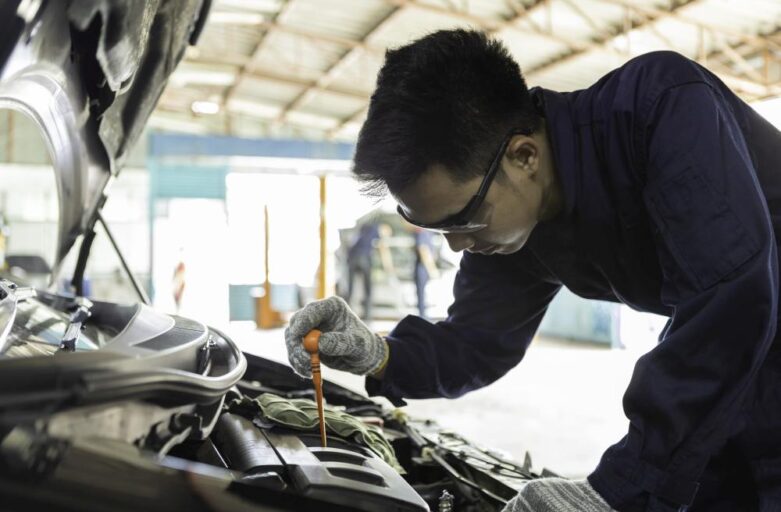
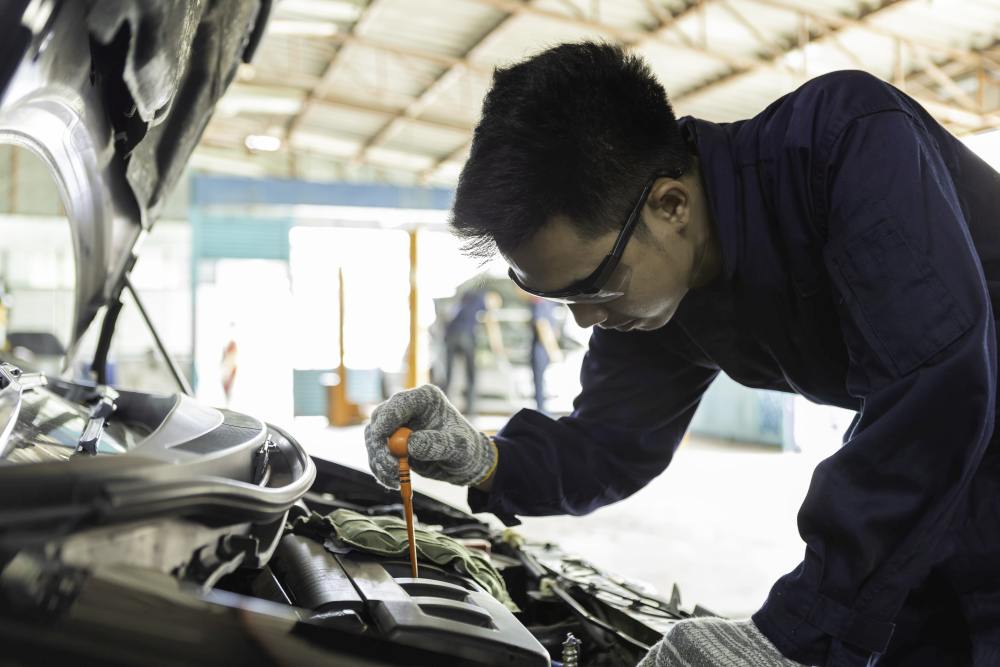
A mechanic wearing gloves and safety glasses checks the oil level under the hood of a car in an indoor auto repair shop.

Engine repair is the category of automotive work that most drivers quietly hope to avoid, and yet it is the one where the quality of the workshop makes the biggest difference to the outcome.

What the Engine Actually Does and Why It Fails

The internal combustion engine is one of the most complex mechanical systems in everyday use. It takes fuel, mixes it with air in precise ratios, ignites the mixture under compression, converts the resulting energy into rotational motion, and does all of this thousands of times per minute across hundreds of thousands of kilometres. The precision required to sustain this process without constant failure is considerable, and it is maintained by a combination of engineering tolerance, lubrication, cooling, and the chemical properties of the fuel and oil flowing through the system.

Failure occurs when any part of this system is compromised. Lubrication failures from oil deprivation or degraded oil cause metal surfaces to contact each other without the protective film that prevents wear. Cooling system failures allow temperatures to exceed the design limits of seals, gaskets, and aluminium components. Fuel system problems deliver incorrect air-to-fuel ratios that cause misfires, incomplete combustion, and carbon buildup. Each failure mode produces distinctive symptoms, and each requires a different diagnostic and repair approach.

Recognising Engine Problems Early

The most effective engine repairs are the ones that address problems before they cascade into major damage. Signals worth investigating promptly include:

  • Blue smoke from the exhaust, indicating oil entering the combustion chamber
  • White smoke, which may indicate coolant entering the combustion process through a failed head gasket
  • Black smoke, pointing to a rich fuel mixture or incomplete combustion
  • Ticking or knocking sounds from the engine bay, particularly on cold starts
  • Loss of power or poor fuel economy without a change in driving habits
  • Oil consumption that requires a top-up between scheduled changes

Engine repair carried out when these early signs appear almost always costs less than the same repair performed after the underlying problem has been allowed to develop for months.

Common Engine Repair Procedures

Depending on the nature and extent of the fault, engine repair may involve:

  • Head gasket replacement: one of the more significant repairs, required when the gasket between the cylinder head and engine block fails and allows coolant and combustion gases to mix
  • Timing belt or chain service: a preventative replacement that prevents catastrophic engine failure if the belt or chain breaks while the engine is running
  • Valve and camshaft service: required when valve seating, spring tension, or camshaft lobe wear begins to affect compression and engine breathing
  • Piston ring and cylinder bore service: needed when oil consumption increases due to worn rings or bore surfaces
  • Oil seal and gasket replacement: routine in higher-mileage engines where synthetic rubber seals harden and crack with age

“Prevention is always better than cure.” – Lee Kuan Yew

In engine maintenance, this holds with particular force. A timing belt changed at 80,000 kilometres costs a fraction of an engine rebuild caused by the belt snapping at 100,000 kilometres.

The Diagnostic Process Before Repair

Quality engine repair services begin with accurate diagnosis, not guesswork. A qualified technician will use a combination of tools and methods: electronic diagnostic scanning to retrieve fault codes from the engine management system, compression testing to assess the condition of each cylinder individually, leak-down testing to identify where compression loss is occurring, and physical inspection of oil condition, coolant colour, and exhaust characteristics.

This process takes time but prevents the situation where a part is replaced based on a symptom rather than a verified cause, and the original fault persists after the repair.

Why Engine Repair Requires Specialist Knowledge

Modern vehicle engines vary enormously between manufacturers. A direct-injection turbocharged unit from one brand operates on fundamentally different principles from a naturally aspirated unit from another. The maintenance schedules, failure modes, and repair procedures differ accordingly.

A vehicle engine specialist who has worked extensively on a specific type of engine brings knowledge that a general mechanic simply does not have. This experience reduces diagnostic time, improves repair accuracy, and decreases the probability of a repeat visit for the same fault.

Engine repair services done correctly restore performance, protect safety, and extend the reliable service life of a vehicle that represents a substantial investment for most Singapore drivers.

Car Repair Services in Singapore for Reliable Vehicle Solutions

A mechanic uses a laptop computer to diagnose a car engine with the hood open.

Car repair in Singapore covers an enormous range of work, from a brake pad change that takes an afternoon to a comprehensive engine overhaul that requires the vehicle for several days, and the quality of the outcome depends almost entirely on who is doing the work.

The Spectrum of Car Repair Work

Not all car repairs are equal in complexity, urgency, or cost. Understanding the categories helps drivers prioritise and plan:

  • Urgent safety repairs: brake system failures, steering component damage, suspension collapse, and tyre blowouts require immediate attention because they compromise the safety of the driver and other road users
  • Mechanical reliability repairs: engine misfires, cooling system failures, transmission issues, and fuel system faults that will worsen if deferred
  • Comfort and convenience repairs: air conditioning failure, window regulator faults, seat heater malfunction, and infotainment system issues that do not affect safety but significantly affect driving experience
  • Cosmetic repairs: body panel damage, paint scratches, and trim restoration that affect appearance but not function

Singapore’s environment affects all four categories. The heat accelerates rubber component degradation, which shows up in drive belt failures, hose cracks, and tyre sidewall issues. Humidity promotes corrosion in brake systems, exhaust components, and electrical connections.

How to Assess Whether a Repair Is Urgent

Drivers often face the judgment call of whether a symptom warrants immediate workshop attention or can wait until the next scheduled service. Some signs should always be treated as urgent:

  • Brake pedal that feels soft, spongy, or travels further than usual before resistance is felt
  • Steering that pulls strongly to one side without input
  • Temperature gauge that rises into the red zone, indicating overheating
  • Loss of power or severe engine hesitation under acceleration
  • Visible fluid pooling under the vehicle

For any of these, continuing to drive risks escalating a repairable problem into one that requires significantly more expensive intervention.

“Act decisively and early. Waiting to be certain is often waiting too long.” – Lee Kuan Yew.

This applies directly to vehicle repair decisions. The cost curve for most mechanical failures rises steeply with delay.

What Distinguishes Quality Workshops

The car repair market in Singapore ranges from highly specialised workshops with manufacturer-certified technicians to general workshops with variable equipment and experience levels. Choosing well requires attention to:

  • Technician experience with the specific vehicle make: a workshop that regularly services European vehicles handles them differently from one that primarily works on Japanese models
  • Diagnostic capability: modern vehicles have complex electronic systems that cannot be diagnosed accurately without appropriate scanning and data analysis tools
  • Communication: a good workshop explains what they found, what needs to be done, why it needs to be done, and what the alternatives are before the customer authorises any work
  • Parts quality: the use of OEM or equivalent-specification parts, not the cheapest available option that will fail again prematurely

Managing Repair Costs Intelligently

Car repair costs in Singapore are not fixed. The same repair job can vary significantly between workshops based on labour rates, parts sourcing, and overhead costs. However, the lowest quote is not always the best value. A repair performed with inferior parts or by a technician unfamiliar with the vehicle may need to be repeated within a year, costing more in total than a correctly priced repair done once by a qualified hand.

For significant repairs, getting two or three quotes is reasonable. When comparing quotes, ensure they specify the same scope of work, the same or equivalent parts standard, and include a warranty statement. A quote that is significantly lower than the others should prompt questions about what has been excluded.

The Long View on Vehicle Maintenance

Car repair services done well and at the right time support vehicle longevity. A car that receives timely attention to developing problems retains its reliability and value better than one that is driven until something fails dramatically. In Singapore, where vehicle costs are high and COE premiums make replacement expensive, extending the reliable service life of an existing vehicle through good maintenance and timely repair makes strong financial sense.

Building a relationship with a trusted workshop, rather than shopping around for the cheapest deal on each repair, produces better outcomes. A workshop familiar with a vehicle’s history spots developing patterns that a new workshop seeing the car for the first time would miss entirely.

Reliable car repair in Singapore is available to every driver who invests a little time in finding the right workshop and trusting it to do the job properly.

Car Servicing in Singapore for Better Performance and Reliability

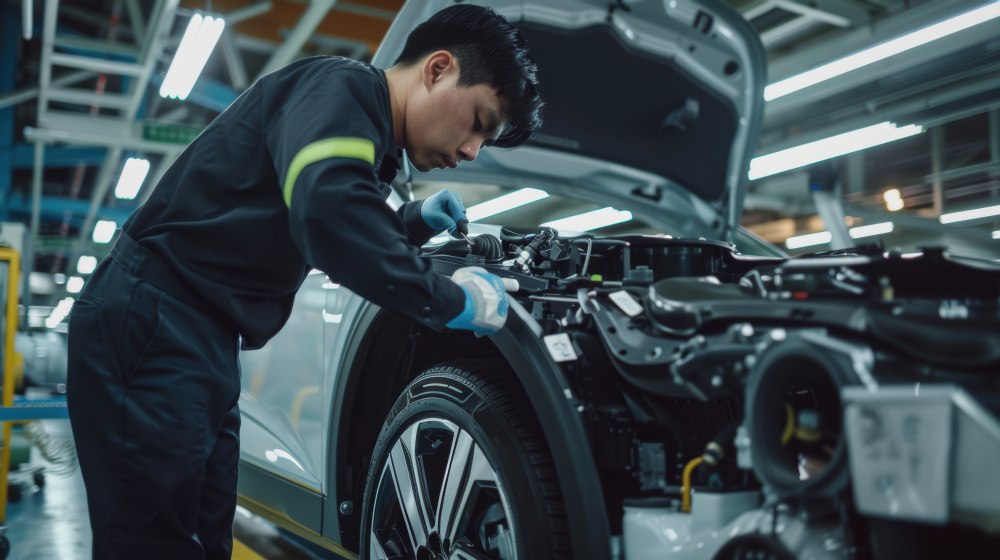
A factory worker inspects and repairs the engine compartment of a car on an automotive assembly line.

Car servicing in Singapore is not optional if you want a vehicle that performs as it should – the combination of heat, humidity, and stop-start urban traffic creates conditions that require consistent attention to keep a car running at its best.

What a Full Service Actually Covers

Many drivers use the term servicing interchangeably with an oil change, but a complete car service covers considerably more ground. A full periodic inspection includes:

  • Engine oil and filter replacement using oil of the grade specified for the vehicle
  • Inspection and top-up of all fluid levels: coolant, brake fluid, power steering fluid, and windshield washer fluid
  • Air filter inspection and replacement if contaminated or past service life
  • Cabin air filter check
  • Battery health assessment: voltage, cold cranking amps, and terminal condition
  • Brake pad thickness measurement and brake disc surface inspection
  • Tyre condition check: tread depth, sidewall integrity, and inflation pressure
  • Belt and hose inspection for cracking, fraying, or signs of impending failure
  • Diagnostic scan for stored fault codes

This is the kind of comprehensive car servicing that keeps problems small and predictable rather than large and unexpected.

The Local Conditions That Demand Regular Attention

Singapore’s tropical climate is harder on vehicles than many drivers appreciate. Ambient temperatures regularly reach 32 to 34 degrees Celsius, and engine bay temperatures during operation are considerably higher. Engine oil degrades more rapidly under sustained heat, losing its lubricating properties before the odometer suggests it needs changing. Coolant systems work harder to maintain safe operating temperatures in Singapore’s heat than they would in a temperate market.

Humidity is the other factor. Brake components, undercarriage elements, and exposed metal surfaces are in a continuously moist environment. Brake rotors that cool rapidly after a rain shower and heat again in traffic experience thermal cycling that accelerates surface oxidation. Air conditioning systems run almost continuously here, placing compressor loads on the engine and refrigerant circuits that would be far lighter in a seasonal climate.

The Cost of Skipping Services

The temptation to extend service intervals to save money in the short term is understandable, but expensive in practice. Engine oil that remains in service beyond its useful life becomes thick, acidic, and contaminated with combustion byproducts. It loses its ability to protect the precision surfaces inside the engine. The resulting wear is cumulative and irreversible: scored cylinder walls, worn crankshaft bearings, and increased oil consumption that eventually leads to engine replacement or rebuild.

“Successful economies are built on discipline and investment.” – Lee Kuan Yew.

The same logic applies to car ownership. The discipline of regular servicing is an investment in the reliability and longevity of an expensive asset.

Choosing a Trusted Workshop for Car Servicing in Singapore

The quality of car servicing in Singapore varies considerably between workshops. What to look for:

  • Make-specific experience: technicians familiar with the specific systems of your vehicle’s manufacturer
  • Current diagnostic equipment: tools that interface correctly with modern vehicle electronics
  • OEM-compatible or genuine parts: use of replacement components that meet the original equipment specification
  • Transparent pricing: a clear quote before work begins, with no unexpected additions
  • Service record: a workshop that maintains accurate service documentation supports the vehicle’s history file, which matters for resale value

How Service Intervals Should Work

Most manufacturers provide two service interval benchmarks: time and mileage, whichever comes first. In Singapore, where many drivers cover relatively low mileage but drive frequently in traffic, the time interval often triggers service before the mileage does.

A car that covers 10,000 kilometres per year but idles in traffic daily still accumulates the thermal cycling, moisture exposure, and oil degradation that make annual servicing appropriate. Following the lower of the two thresholds – time or distance – is the conservative and correct approach.

Preparation Before Each Service Visit

Making a service appointment productive involves more than arriving on time:

  • Note any unusual sounds, smells, or vehicle behaviours observed since the last service
  • Check whether any warning lights have appeared on the dashboard
  • Confirm whether the vehicle is due for any major service items at the upcoming mileage point, such as timing belt replacement
  • Ask the service advisor to provide a written estimate before authorising any work beyond the standard service scope

Professional car maintenance done consistently is the single most reliable way to avoid breakdowns, extend vehicle life, and maintain the performance that made the car worth buying. Car servicing in Singapore, approached with the right frequency and by the right hands, keeps every journey dependable.

Auto Repair Services in Singapore for Reliable Vehicle Maintenance

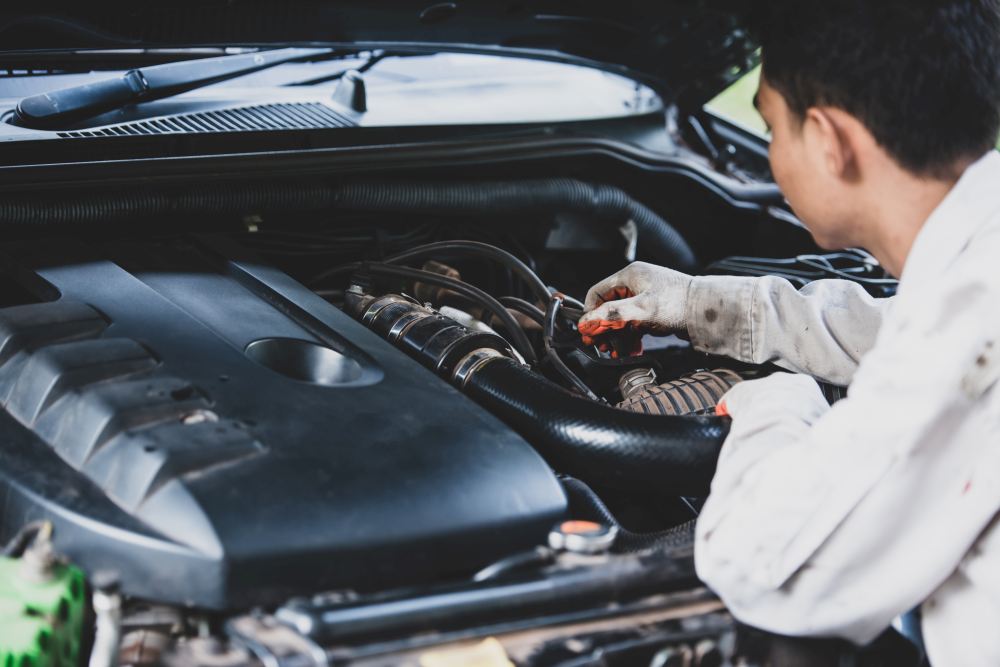
A mechanic wearing a white uniform works under the open hood of a car, inspecting the engine components.

Auto repair is the kind of service most drivers hope they will not need urgently, which is exactly why choosing a workshop before that urgency arrives is one of the more sensible decisions a car owner can make.

The Range of Auto Repair Services

The term auto repair covers an enormous scope of work. At one end sits routine servicing: oil changes, air filter replacements, spark plug checks, and tyre rotations that keep a vehicle running as the manufacturer intended. At the other end sits complex diagnosis and repair: engine rebuilds, gearbox overhauls, suspension geometry correction, electrical fault tracing, and air conditioning system repairs that require specialist training and dedicated equipment.

Between these extremes lies the daily work of a capable workshop: brake pad and disc replacement, timing belt and chain service, coolant system flushing, battery and alternator replacement, CV joint service, and a range of checks that catch problems before they become expensive failures.

Why Singapore’s Driving Conditions Matter

Singapore’s road environment places specific demands on vehicles. The combination of high ambient temperatures, stop-start urban traffic, year-round high humidity, and the relatively short distances driven per trip creates conditions that accelerate wear on certain components more than typical highway-dominated driving would.

Engine oil degrades more quickly under the thermal cycling of repeated short trips. Brake components face more frequent application in dense traffic. Air conditioning systems, running continuously against Singapore’s heat and humidity, experience higher compressor loads than systems in temperate climates. Auto repair intervals and inspection priorities should reflect these local conditions, not simply follow generic international manufacturer schedules.

Signs That a Workshop Visit Is Overdue

Some vehicle problems announce themselves clearly. Others develop gradually and are easy to normalise until they cannot be ignored:

  • A pulling sensation in the steering wheel, suggesting uneven brake wear or misaligned wheels
  • Longer stopping distances, indicating brake pad or hydraulic system deterioration
  • Engine hesitation or rough idling, which may point to fuel system, ignition, or sensor issues
  • Unusual smells, particularly burning oil, overheating coolant, or clutch material under heavy use
  • Warning lights on the dashboard, which should always be taken seriously rather than covered with tape

“Problems can be solved if you face them squarely.” – Lee Kuan Yew

A vehicle problem that is acknowledged and addressed early is almost always resolved more cheaply than one that is deferred until the situation becomes unavoidable.

Choosing the Right Workshop

Not all auto repair services are equivalent in quality. The factors worth evaluating before committing to a workshop include:

  • Technician qualifications: Are mechanics trained and experienced with the specific vehicle make and model?
  • Diagnostic equipment: Does the workshop use up-to-date scanning and diagnostic tools for the vehicle types they service?
  • Transparency: Does the workshop explain what they found, why the repair is needed, and what the alternatives are?
  • Warranty on work: Is the repair backed by a warranty that gives the customer recourse if the problem recurs?
  • Communication: how quickly do they respond to queries, and do they keep the customer informed during longer repairs?

A workshop that scores well on these criteria is worth the time it takes to find.

Routine Maintenance vs Reactive Repair

The most cost-effective approach to vehicle ownership in Singapore is one that prioritises regular maintenance over reactive repair. Routine servicing at the manufacturer’s recommended intervals, or adjusted intervals that account for local conditions, catches deteriorating components before they fail. An oil change that takes thirty minutes and a modest sum prevents the engine damage that can result from running on degraded lubricant. A tyre pressure check costs nothing but prevents uneven wear that shortens tyre life.

Vehicle maintenance is not an expense that competes with ownership pleasure. It is what makes ownership reliable, safe, and ultimately less expensive over the service life of the vehicle.

Planning Vehicle Care Across the Year

For car owners who want to approach vehicle maintenance systematically, a simple annual schedule helps:

  • Every 5,000 to 10,000 km: oil and filter change, visual inspection of fluid levels, and tyre condition
  • Every 20,000 to 30,000 km: cabin and engine air filter replacement, brake system inspection
  • Every 40,000 to 60,000 km: spark plug replacement, transmission fluid check, coolant system assessment
  • At manufacturer-specified intervals: timing belt or chain service, which, if missed, can result in catastrophic engine damage

Auto repair done with the right frequency, by qualified hands, is what keeps a vehicle reliable through every season of Singapore driving.

Car Towing Services in Singapore for Fast Roadside Assistance

A man in an orange safety vest writes on a clipboard while another man sits on the open tailgate of a white pickup truck, surrounded by greenery.

Car towing services in Singapore are one of those resources most drivers never think about until the moment they need them urgently, and at that point, the quality and speed of the service they reach matters enormously.

When Towing Becomes Necessary

A vehicle can become immobile for many reasons. The most common include:

  • Engine failure or overheating that makes continued driving unsafe or impossible
  • A flat tyre in a location where changing it safely is not practical
  • A battery that has discharged completely and cannot be jump-started on site
  • An accident that has damaged the vehicle’s steering, suspension, or drivetrain
  • A seized or failed transmission that prevents the vehicle from moving under its own power
  • Running out of fuel in a location where a fuel delivery is not available or safe

In Singapore’s dense urban environment, a broken-down vehicle quickly creates a hazard for other road users. LTA regulations require vehicles to be moved from active traffic lanes as quickly as possible. A fast-responding towing service resolves the breakdown situation efficiently while keeping the road clear.

Types of Towing Equipment and Their Applications

Not every breakdown calls for the same type of recovery vehicle. Understanding the options helps drivers communicate their situation clearly when calling for assistance:

  • Flatbed tow trucks: the vehicle is loaded onto a flat platform and transported without any wheels on the road. This is the safest method for vehicles with damaged drivetrains, all-wheel drive systems, or significant collision damage
  • Wheel-lift tow trucks: either the front or rear wheels are lifted while the other axle remains on the road. Suitable for vehicles that can be towed in this configuration without risking drivetrain damage
  • Dolly towing: additional wheels support one end of the vehicle fully off the ground. Used in situations where a wheel-lift configuration would damage the transmission

A qualified operator of car towing services will assess the vehicle condition and select the appropriate recovery method before attaching anything.

24-Hour Availability and Response Time

Breakdowns do not observe business hours. The value of a towing service is directly tied to its availability around the clock and its ability to reach the driver within a reasonable time. In Singapore, where distances are relatively short and road coverage is dense, a reputable operator should be able to deploy a vehicle to most locations on the island within 30 to 45 minutes under normal traffic conditions.

“You must have patience and determination. A problem is rarely solved immediately.” – Lee Kuan Yew.

This applies aptly to breakdown situations. Staying calm, getting the vehicle safely to the side of the road, and waiting for a professional to arrive is always the correct response.

What to Do While Waiting for a Tow

  • Switch on hazard lights immediately and keep them on until the tow truck arrives
  • If safe to do so, move the vehicle to the road shoulder or nearest safe stopping area
  • Place a warning triangle at least 30 metres behind the vehicle on expressways or 10 metres on regular roads
  • Stay inside the vehicle or behind a safety barrier, particularly on expressways
  • Have your vehicle registration number, current location as precisely as possible, and a description of the fault ready when you call the towing company

Choosing a Reliable Towing Provider

A roadside assistance and vehicle recovery service is worth evaluating before you need it, rather than during a stressful breakdown situation. Criteria to consider:

  • 24/7 availability with a direct telephone line, not just an online booking system
  • Confirmed response time commitments, not vague estimates
  • Equipment suitable for the vehicle type, including electric vehicles if applicable
  • Transparent pricing with no hidden surcharges for late-night, weekend, or expressway recovery
  • Connection to a trusted repair workshop so that the breakdown can be diagnosed and repaired without unnecessary delays

Towing and Insurance in Singapore

Most comprehensive motor insurance policies in Singapore include a roadside assistance component that covers a specified number of towing incidents per policy year. It is worth understanding the terms of this coverage before a breakdown occurs: the maximum towing distance covered, whether the insurer requires you to use their nominated provider, and how claims are submitted.

For drivers whose policies do not include roadside assistance, arranging a standalone towing and assistance plan in advance is considerably cheaper than paying emergency rates at the moment of need.

Dependable car towing services in Singapore transform a stressful roadside situation into a managed process – getting you and your vehicle to safety quickly and professionally.

Long-Term Car Rental in Singapore: Plans, Costs, and Benefits

Long term car rental in Singapore is something that more people are turning to quietly, practically, without fanfare, the way good decisions often get made. The island city-state has always had a complicated relationship with the private car. It rations them. It taxes them. It makes ownership feel, to those who have done the sums, like a choice that requires genuine justification. And so, for a growing number of residents and expatriates, the longer-term rental arrangement has become not a fallback but a preference.

Understanding What Long-Term Car Rental Actually Means

The phrase covers more ground than it might first appear. In Singapore, long term car rental generally refers to any agreement running from one month upwards, though the most common contracts sit in the three-month to twelve-month range. Beyond that, arrangements begin to resemble leasing more closely, and the distinction between the two blurs.

What separates a long-term rental from its short-term counterpart is not merely the duration. It is the structure. Longer agreements tend to carry lower monthly rates, more comprehensive inclusions, and a greater sense of stability for both parties. You are not a passing customer. You are, in the eyes of the provider, something closer to a reliable tenant.

Typical inclusions in a long term car rental Singapore package:

  • Road tax coverage for the duration of the agreement
  • Routine servicing and scheduled maintenance
  • 24-hour roadside assistance
  • Comprehensive or third-party insurance, depending on the tier
  • A defined mileage allowance per month

What is and is not included varies considerably between providers, which is why reading the fine print matters far more than the headline monthly figure.

The Cost of Long-Term Car Rental in Singapore

Pricing, as with most things in Singapore, is layered. For a modest, fuel-efficient compact, a long term car rental singapore arrangement might begin at around S$1,100 to S$1,400 per month on a twelve-month contract. Mid-range sedans and family-oriented vehicles typically fall between S$1,500 and S$2,200 per month. Larger SUVs and premium models climb higher still.

Several variables pull these figures in one direction or the other:

  • Contract length: A six-month agreement will cost more per month than a twelve-month one. The longer the commitment, the more the provider can reduce the monthly rate.
  • Vehicle category: Engine size, age, and model all feed into pricing. Newer vehicles cost more, though they often come with better fuel economy and lower maintenance risk.
  • Mileage cap: Most agreements specify a monthly mileage limit, commonly between 1,500 and 2,500 kilometres. Exceeding it triggers a per-kilometre surcharge that can add up quickly.
  • Insurance level: Comprehensive coverage costs more upfront but protects you from unpredictable out-of-pocket expenses.

Is It Cheaper Than Owning?

For most people in Singapore, the honest answer is yes, often considerably so. When you factor in Certificate of Entitlement costs, depreciation, insurance, road tax, and servicing, ownership of a mid-range vehicle can cost S$2,500 to S$3,500 per month over a ten-year period. A well-structured extended car rental in Singapore sidesteps the heaviest of those costs entirely.

There is also the question of capital. Buying a car in Singapore requires a significant lump sum. Renting requires nothing of the kind. That freed capital, invested or simply kept liquid, has a value of its own.

Who Uses Long-Term Car Rental in Singapore?

The profile of people who choose long term vehicle rental in Singapore is broader than you might expect. It is not solely the newly arrived expatriate, though they remain a significant portion of the market. It includes:

  • Young professionals who want reliable personal transport without a long financial commitment
  • Families between cars, having sold one vehicle and not yet committed to another purchase
  • Business travellers and consultants on extended project postings whose stay could stretch or shorten depending on circumstances
  • Retirees and older residents who prefer the predictability of a fixed monthly cost over the unpredictability of ownership maintenance
  • Individuals awaiting COE results or navigating the paperwork involved in purchasing

Each group arrives at the same solution by a different route. That is, perhaps, the most telling evidence that the model works.

Practical Considerations Before You Sign

A monthly rate that looks attractive in a brochure can look rather different once you have driven the car for three months. Before committing to any long term car rental Singapore agreement, it is worth working through the following:

  • What happens if you need to end the contract early? Termination fees vary widely and can be substantial.
  • Is insurance fully comprehensive, and what is the excess in the event of a claim?
  • Who arranges repairs if the vehicle is damaged, and how long will you be without a car?
  • Is a replacement or courtesy vehicle provided during servicing periods?
  • What is the agreed condition standard for the vehicle on return, and how is wear and tear assessed?

These are not small questions. They shape the real cost and real convenience of the arrangement.

The Flexibility Factor

One of the genuinely underappreciated advantages of renting a car long term in Singapore is what it does not lock you into. Life changes. Assignments end early or extend unexpectedly. Families grow. Circumstances shift. An ownership position takes years and significant expense to unwind. A rental agreement, by comparison, has a defined endpoint and, with careful contract selection, the possibility of adjustment.

Singapore is a city built for people who think ahead. Those who approach transport the same way, weighing the actual cost, the flexibility, and the practical day-to-day reality, tend to find that a well-chosen car rental sg arrangement fits more neatly into life here than ownership ever quite managed to.