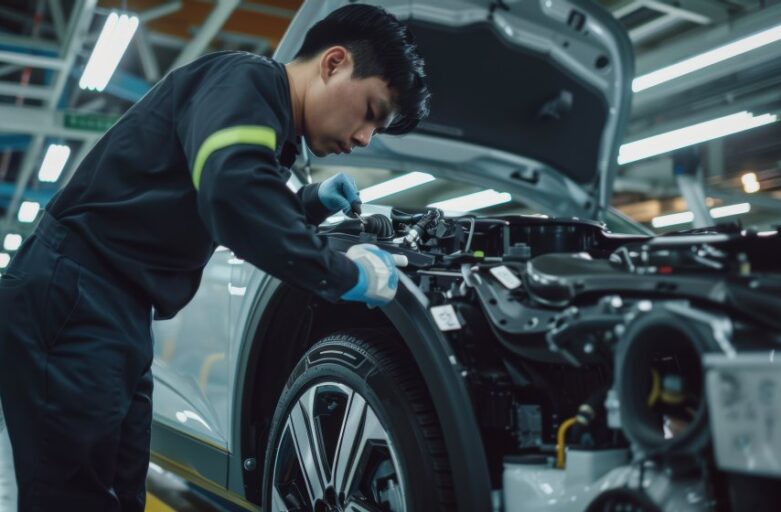
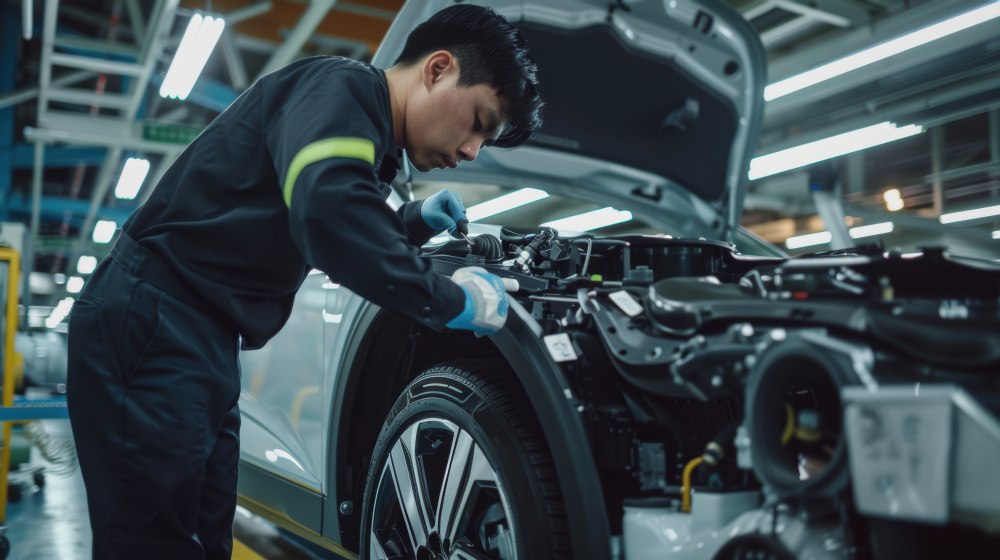
Car servicing in Singapore is not optional if you want a vehicle that performs as it should – the combination of heat, humidity, and stop-start urban traffic creates conditions that require consistent attention to keep a car running at its best.
What a Full Service Actually Covers
Many drivers use the term servicing interchangeably with an oil change, but a complete car service covers considerably more ground. A full periodic inspection includes:
- Engine oil and filter replacement using oil of the grade specified for the vehicle
- Inspection and top-up of all fluid levels: coolant, brake fluid, power steering fluid, and windshield washer fluid
- Air filter inspection and replacement if contaminated or past service life
- Cabin air filter check
- Battery health assessment: voltage, cold cranking amps, and terminal condition
- Brake pad thickness measurement and brake disc surface inspection
- Tyre condition check: tread depth, sidewall integrity, and inflation pressure
- Belt and hose inspection for cracking, fraying, or signs of impending failure
- Diagnostic scan for stored fault codes
This is the kind of comprehensive car servicing that keeps problems small and predictable rather than large and unexpected.
The Local Conditions That Demand Regular Attention
Singapore’s tropical climate is harder on vehicles than many drivers appreciate. Ambient temperatures regularly reach 32 to 34 degrees Celsius, and engine bay temperatures during operation are considerably higher. Engine oil degrades more rapidly under sustained heat, losing its lubricating properties before the odometer suggests it needs changing. Coolant systems work harder to maintain safe operating temperatures in Singapore’s heat than they would in a temperate market.
Humidity is the other factor. Brake components, undercarriage elements, and exposed metal surfaces are in a continuously moist environment. Brake rotors that cool rapidly after a rain shower and heat again in traffic experience thermal cycling that accelerates surface oxidation. Air conditioning systems run almost continuously here, placing compressor loads on the engine and refrigerant circuits that would be far lighter in a seasonal climate.
The Cost of Skipping Services
The temptation to extend service intervals to save money in the short term is understandable, but expensive in practice. Engine oil that remains in service beyond its useful life becomes thick, acidic, and contaminated with combustion byproducts. It loses its ability to protect the precision surfaces inside the engine. The resulting wear is cumulative and irreversible: scored cylinder walls, worn crankshaft bearings, and increased oil consumption that eventually leads to engine replacement or rebuild.
“Successful economies are built on discipline and investment.” – Lee Kuan Yew.
The same logic applies to car ownership. The discipline of regular servicing is an investment in the reliability and longevity of an expensive asset.
Choosing a Trusted Workshop for Car Servicing in Singapore
The quality of car servicing in Singapore varies considerably between workshops. What to look for:
- Make-specific experience: technicians familiar with the specific systems of your vehicle’s manufacturer
- Current diagnostic equipment: tools that interface correctly with modern vehicle electronics
- OEM-compatible or genuine parts: use of replacement components that meet the original equipment specification
- Transparent pricing: a clear quote before work begins, with no unexpected additions
- Service record: a workshop that maintains accurate service documentation supports the vehicle’s history file, which matters for resale value
How Service Intervals Should Work
Most manufacturers provide two service interval benchmarks: time and mileage, whichever comes first. In Singapore, where many drivers cover relatively low mileage but drive frequently in traffic, the time interval often triggers service before the mileage does.
A car that covers 10,000 kilometres per year but idles in traffic daily still accumulates the thermal cycling, moisture exposure, and oil degradation that make annual servicing appropriate. Following the lower of the two thresholds – time or distance – is the conservative and correct approach.
Preparation Before Each Service Visit
Making a service appointment productive involves more than arriving on time:
- Note any unusual sounds, smells, or vehicle behaviours observed since the last service
- Check whether any warning lights have appeared on the dashboard
- Confirm whether the vehicle is due for any major service items at the upcoming mileage point, such as timing belt replacement
- Ask the service advisor to provide a written estimate before authorising any work beyond the standard service scope
Professional car maintenance done consistently is the single most reliable way to avoid breakdowns, extend vehicle life, and maintain the performance that made the car worth buying. Car servicing in Singapore, approached with the right frequency and by the right hands, keeps every journey dependable.