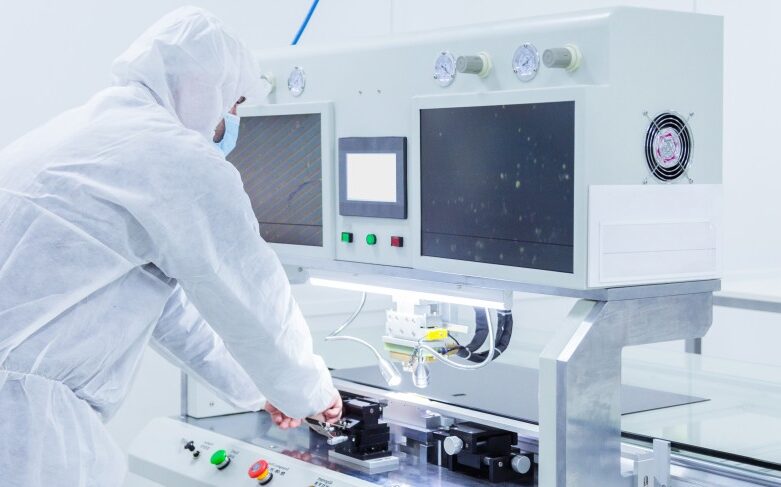
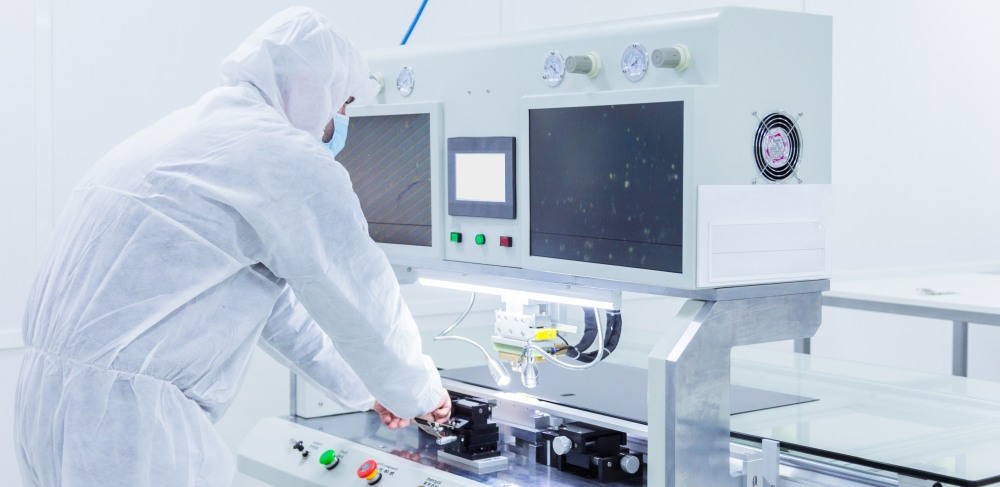
AMT precision parts are built at the point where engineering discipline and operational demand meet without compromise. In manufacturing, the gap between a component that works and one that works every time, under pressure, in a cleanroom or on a production line, is often measured in microns. That distance is where the real work happens.
What Sets Precision Manufacturing Apart
There is a particular kind of rigour involved in high-accuracy component production. The tools must be calibrated consistently, the materials selected with attention to how they behave under thermal and mechanical stress, and the process repeated with the kind of discipline that prevents variation rather than corrects it. AMT precision engineering draws on deep manufacturing knowledge to deliver components where every dimension carries a consequence.
Precision parts are not simply machined to a tight specification. They are engineered with the end-use environment in mind. A component destined for cleanroom medical device assembly faces entirely different demands from one destined for an automotive drivetrain or an industrial sensor array. The materials, surface finishes, and production methods are chosen accordingly, with each decision traceable back to a real performance requirement.
Medical Applications That Cannot Afford Error
Medical device manufacturing places some of the most demanding requirements on component quality anywhere in industry. A surgical tool must seat and engage exactly. An endoscopic component must navigate narrow anatomical channels, function reliably under repeated sterilisation cycles, and hold its dimensions through each one. There is no margin for drift.
AMT precision parts used in medical applications are produced in controlled environments, often cleanrooms certified to international standards. These conditions prevent particulate contamination and ensure that each component meets the dimensional and surface finish requirements that regulatory bodies demand. Every step in the production process is documented, creating the traceability that underpins ISO 13485 and FDA compliance.
“The quality of a leader is reflected in the standards they set for themselves,” Lee Kuan Yew once observed. In precision manufacturing, that standard is expressed in microns and maintained through process consistency rather than end-of-line inspection alone.
Key medical applications include:
- Surgical and endoscopic components: complex small-geometry parts requiring sub-millimetre tolerances
- Implantable device parts: biocompatible materials processed under strict contamination controls
- Diagnostic instrument housings: components demanding consistent surface finishes and exact dimensional fitment
Industrial Uses Where Accuracy Is the Product
Beyond medicine, high-accuracy components appear wherever performance margins are tight. In semiconductor fabrication equipment, parts must align to within fractions of a micron. In co-packaged optics for data centre hardware, thermal management components must dissipate heat efficiently under load without warping. In aerospace and defence assemblies, dimensional accuracy is not a quality metric but a safety condition.
High-precision parts manufactured by AMT span a range of materials and processes. Metal injection moulding allows complex three-dimensional geometries to be produced at volume, with tolerances that conventional machining alone would struggle to achieve reliably. Ceramic injection moulding extends this capability into hard, wear-resistant, and electrically insulating materials suited to chemically aggressive or thermally demanding industrial environments.
For thermal management specifically, tungsten-copper heat sinks offer the conductivity and dimensional stability that standard materials cannot match. These components appear in laser systems, power electronics, and high-frequency communication hardware where heat dissipation is a primary design requirement.
The Processes Behind the Parts
The quality of high-accuracy component manufacturing depends on process selection as much as on craftsmanship. Several key technologies underpin the precision-engineered components produced by AMT.
- Metal injection moulding (MIM): combines the design freedom of plastic injection moulding with the structural properties of sintered metal, enabling complex internal features at production volumes
- Ceramic injection moulding (CIM): applies the same principle to technical ceramics, delivering excellent hardness, chemical resistance, and electrical insulation
- High-precision plastic injection moulding: used for medical-grade polymers requiring tight dimensional control and repeatable surface finish
- Cleanroom assembly: final assembly carried out in controlled environments to prevent contamination in medical and optical components
Each process is supported by metrology and inspection at relevant stages, ensuring finished parts conform to drawing requirements before they leave the facility.
Choosing the Right Manufacturer
Selecting a precision parts supplier is not a matter of price per unit. The real cost of a substandard component includes rework, delayed programmes, and in medical applications, potential patient risk. A capable manufacturer brings process knowledge, material expertise, and quality systems that reduce that risk before the first part is made.
AMT’s experience across medical, industrial, automotive, and optical sectors gives it a cross-disciplinary perspective that narrow specialists rarely develop. A solution found for a thermal management challenge in a semiconductor application may draw directly on knowledge gained from an endoscopic component programme. That accumulated technical depth is a form of precision in itself.
For engineers specifying parts for demanding applications, a manufacturer who understands both the technical requirements and the regulatory context delivers more than components. It delivers reduced programme risk and the documentation needed to support regulatory submissions.
Accuracy as a Foundation
Precision is not a single moment in a production run. It is a discipline maintained across design, tooling, material selection, process control, and inspection. In medical and industrial manufacturing, the consequences of drift accumulate quietly until they do not.
For manufacturers where accuracy is non-negotiable from the first prototype to full production volume, AMT precision parts provide the consistent, documented foundation that both quality and regulatory confidence require.