Car transmission repair has a way of arriving in a driver’s life at precisely the wrong moment, yet the truth is that it rarely arrives without announcement. The transmission is not a silent system. It communicates, persistently and in a language that is learnable, through sounds and sensations that accumulate over time before they become impossible to dismiss. The drivers who pay attention to those communications, who treat an unfamiliar noise or a hesitant gear change as information rather than inconvenience, are the ones who avoid the most damaging and expensive outcomes. The ones who do not eventually find themselves with no choice in the matter.
The Nature of Transmission Warnings
There is a pattern to how transmission problems develop that is worth understanding. It is rarely sudden. What presents as an abrupt breakdown is almost always the final point in a sequence that began weeks or months earlier, with signals that were present and either missed or set aside. In Singapore, where persistent heat and stop-start urban traffic place automatic transmissions under continuous cumulative stress, that sequence tends to move faster than in more temperate environments. The window between early warning and serious damage is narrower here, and the cost of missing it is correspondingly higher.
The Warning Signs That Demand Attention
Slipping Gears
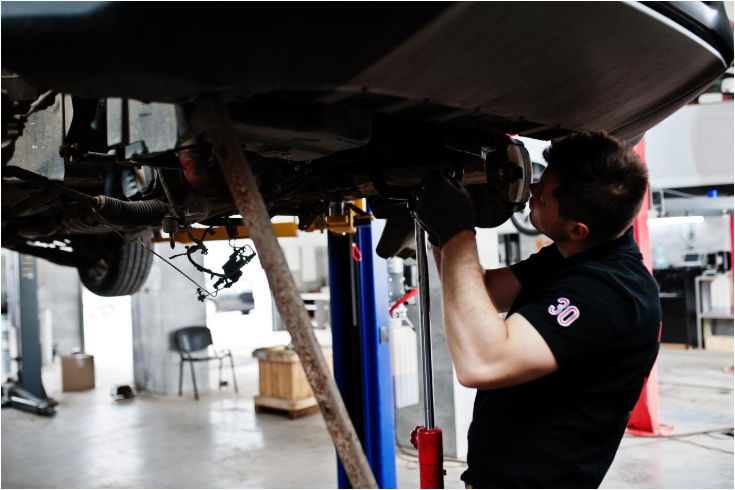
Gear slip is one of the most direct communications a transmission can send. The engine revs climb, the vehicle does not accelerate in proportion, and the mechanical connection between engine and road dissolves momentarily. In an automatic transmission, this typically points to worn clutch packs or fluid that has degraded to the point where it can no longer sustain the hydraulic pressure required for firm gear engagement. In Singapore’s Car transmission repair workshops, gear slip identified early is frequently resolved through fluid renewal and targeted component work. Left unaddressed, the fault propagates and the repair required grows with it.
Unusual Noises
Sound is among the most reliable early indicators of transmission trouble. A healthy transmission operates within a certain range of mechanical quietness. When that changes, when a whine appears at particular speeds, when grinding accompanies gear selection, or when a clunk is felt through the gear lever during engagement, the transmission is communicating a specific change in its internal condition.
Grinding in a manual vehicle typically points to worn synchroniser rings. A whine in an automatic that varies in pitch with vehicle speed suggests bearing wear or fluid pressure irregularities. A clunk on engagement from park into drive often indicates torque converter issues. None of these sounds resolve themselves.
Delayed or Erratic Engagement
When shifting from park to drive, the engagement should be prompt and smooth. A delay, a hesitation, or a sudden lurch into gear signals that the hydraulic system is struggling. This is often associated with solenoid faults in automatic transmissions, where the electronic valves governing fluid flow are not responding with the precision they should. It can also indicate early torque converter problems or fluid pressure irregularities.
Dashboard Warning Lights
The transmission control module monitors system behaviour continuously, logging fault codes whenever it detects an anomaly. A warning light is the vehicle’s most direct attempt at communication and deserves to be treated accordingly. In Singapore’s car transmission repair assessments, electronic fault code retrieval is a standard early step, directing the diagnostic process toward the systems most likely to be involved.
Fluid Leaks and Degraded Fluid Condition
Transmission fluid is the medium through which the entire system functions. When it leaks or degrades, every function it supports is compromised simultaneously. The signs to watch for include:
- A reddish or dark brown puddle beneath the vehicle after parking
- A burnt smell during or after driving in heavy traffic
- Fluid that appears dark, gritty, or carries visible metal particles when checked
- A gradual drop in fluid level between service intervals with no visible external leak
In Singapore’s climate, ambient heat accelerates fluid degradation more rapidly than many drivers expect. Checking fluid condition regularly is the most accessible form of transmission monitoring available without specialist equipment.
Shuddering Under Acceleration
A shudder felt through the vehicle during acceleration, particularly at specific speed ranges, frequently points to torque converter problems in automatic transmissions. The lock-up clutch within the converter can wear or become contaminated over time, producing a vibration sometimes mistaken for an engine misfire or tyre imbalance. Accurate diagnosis is important before any repair is attempted.
Why the Timing of Response Matters
The consistent finding across transmission repair histories is that the cost and complexity of the eventual repair correlates directly with how long the warning signs were present before the vehicle was brought in. A solenoid fault addressed at the first sign of delayed engagement is a targeted, manageable intervention. The same fault, running for months while fluid degrades and internal components wear, may require a full rebuild by the time it is finally assessed. The warning signs do not change between those two outcomes. What changes is when the driver chooses to act on them.
Conclusion
The transmission sends its warnings consistently and in forms that are recognisable to anyone who knows what to look for. Gear slip, unusual noises, delayed engagement, warning lights, degraded fluid, and shuddering are not minor inconveniences to be monitored from a distance. They are communications from a system telling a driver, clearly and repeatedly, that something needs to be done. In Singapore’s demanding driving environment, where the timeline between early warning and serious damage is compressed by heat and traffic conditions, the response should be prompt and professional. Waiting is not a neutral choice. It is a decision with a price, and that price is almost always higher than the cost of timely, expert Car transmission repair.